Recall the comb space, space with vertical lines of length 1 at x = 1/2^i and a horizontal line of length 1, with the origin removed. This is not path affinely finite path connected because we cannot move through the origin.
However, it is connected because any open set containing the x=0 line must extend some distance towards the other lines, hence containing the rest of the comb lines. So there do not exist two disjoint open sets which contain this comb, and it’s connected.
Recall in \mathbb R that \lim_{x\to x_0}f(x) = \infty means: given M> 0, \exists \delta > 0 such that 0 < |x-x_0| < \delta implies f(x) > M.
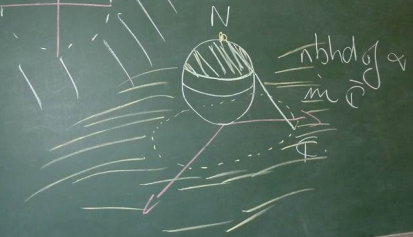
In \mathbb C, a neighbourhood of z_0 \in \mathbb C is a ball and a neighbourhood of \infty has the form \{z : |z| > M\}. Note that in the Riemann sphere model, this would be some region around the “north pole”.
So, “close to \infty” \iff |z| is large \iff 1/|z| is small. Keeping that in mind, this means \begin{aligned} \lim_{z \to z_0} f(z) = \infty &\iff \lim_{z \to z_0} \frac 1 {f(z)} = 0\\ \lim_{z \to \infty} f(z) = w_0 &\iff \lim_{z \to 0} f(1/z) = w_0 \\ \lim_{z \to \infty} f(z) = \infty &\iff \lim_{z \to 0} \frac 1{f(1/z)} = 0 \end{aligned} Examples:
B.C. 19 (8 Ed 18)
Let f be defined in some neighbourhood of z_0.
Definition. We say f is continuous at z_0 if \lim_{z \to z_0} f(z) = f(z_0). That is, given \epsilon > 0 there exists \delta > 0 such that |z-z_0| < \delta \implies |f(z) - f(z_0)| < \epsilon.
Recall that f : \Omega \subseteq \mathbb R \to \mathbb R is differentiable if \lim_{h \to 0} \frac{f(x+h)-f(x)}h exists, and the limit defines f'(x) in \mathbb R.
Definition. For f : \Omega \subseteq \mathbb C\to \mathbb C is differentiable if \lim_{\xi \to 0} \frac{f(z_0+\xi)-f(z_0)}\xi exists and the limit defines f'(z_0).
This definition implies f'(z_0) = \lim_{\Delta z \to 0} \frac{f(z_0+\Delta z) - f(z_0)}{\Delta z}. Writing w = f(z) and \Delta w = f(z_0 + \Delta x) - f(z_0), we can write f'(z_0) = \lim_{\Delta z \to 0} \frac{\Delta w}{\Delta z} = \frac {dw}{dz}(z_0). These are equivalent ways to write the derivative.